


Raccoon
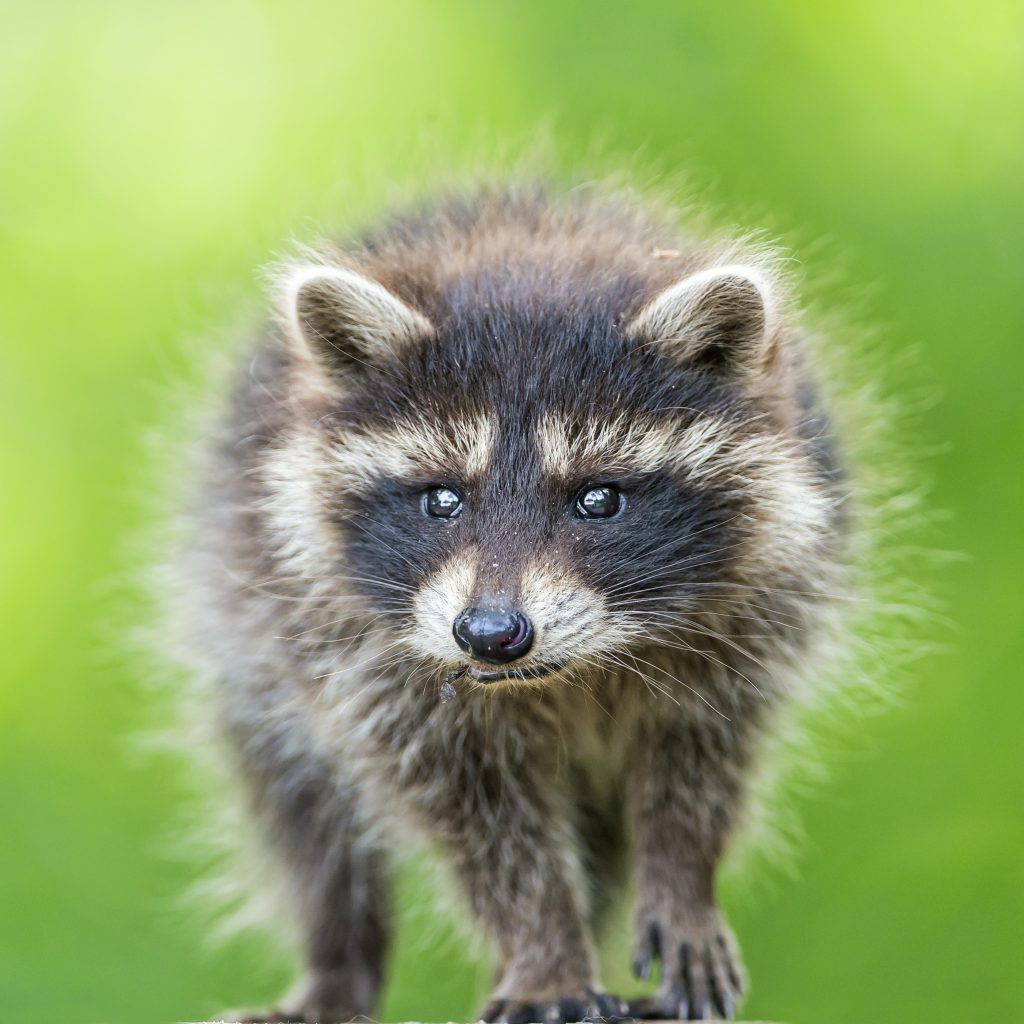
The raccoon (Procyon lotor) is an invasive alien species originating from North America. It was introduced into Europe primarily for fur farming and gradually established stable wild populations.
Biology and Behaviour
- Size: 5–12 kg; body length 40–70 cm
- Appearance: characteristic black facial “mask” and ringed tail
- Habitat: forests, wetlands, agricultural landscapes, and urban environments
- Diet: omnivorous – eggs, bird chicks, amphibians, invertebrates, fruit, waste
- Activity: mostly nocturnal
- Reproduction: one litter per year, typically 2–5 young
Ecological Risks
The raccoon is listed among the invasive alien species of Union concern due to its significant negative impacts:
- Predation on nesting birds, especially waterbirds and ground‑nesting species
- Transmission of diseases and parasites (rabies, roundworms, leptospirosis)
- Competition with native carnivores (e.g., stone marten, pine marten)
- High adaptability and rapid spread
Distribution in Slovakia
- Most common in western and southern Slovakia, especially in lowland areas
- Occurs in floodplain forests, wetlands, river corridors, and urban zones
- Represents a threat to nesting birds in protected areas
Management and Regulation
- Listed on the EU List of Invasive Alien Species
- Subject to a ban on keeping, breeding, and releasing
- Active population control, monitoring, and disease‑prevention measures are recommended


